Common Types of Nuts
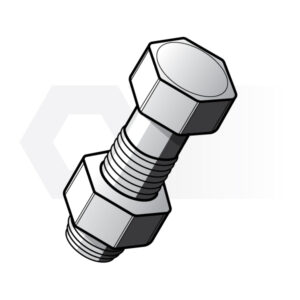
Hex Nuts, Hex Bolt and Nuts
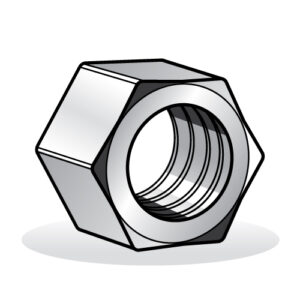
One of the most common nuts is the hex nut. These are hexagonal shaped nuts with internal threads that connect to the external threads of a screw or bolt. They are used with screws or bolts to connect and secure two metal or wooden parts. The parts are secured on either side by the head of the screw or bolt and the hex nut at the bottom to prevent lateral movement.
Applications: Used in light to medium duty applications which require a secure connection between two components.
Imperial Nuts Measurements
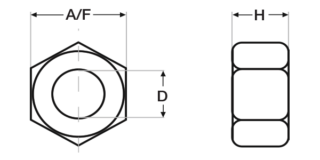
The sizing of these nuts are usually based on the diameter of the internal thread and the height of the nut. The chart also includes the dimension ‘A/F’ which stands for ‘across flats’. This is the distance between the two flat sides of the hexagonal nut.
| Size | Grade 5 & 8 Hex | Nyloc | 2H Hex | ||||||
|---|---|---|---|---|---|---|---|---|---|
| Diameter | Unc T.P.I | UNF T.P.I | UN8 T.P.I. | A/F | Height | A/F | Height | A/F | Height |
| 3/16 | 24 | 32 | 3/8 | 1/8 | 3/8 | 15/64 | |||
| 1/4 | 20 | 28 | 7/16 | 7/32 | 7/16 | 5/16 | |||
| 5/16 | 18 | 24 | 1/2 | 17/64 | 1/2 | 11/32 | |||
| 3/8 | 16 | 24 | 9/16 | 21/64 | 9/16 | 29/64 | |||
| 7/16 | 14 | 20 | 5/8 | 21/64 | 5/8 | 29/64 | |||
| 1/2 | 13 | 20 | 3/4 | 7/16 | 3/4 | 19/32 | 7/8 | 1/2 | |
| 9/16 | 12 | 18 | 7/8 | 31/64 | 7/8 | 41/64 | |||
| 5/8 | 11 | 18 | 15/16 | 35/64 | 15/16 | 3/4 | 1 1/16 | 5/8 | |
| 3/4 | 10 | 16 | 1 1/8 | 41/64 | 1 1/16 | 7/8 | 1 1/4 | 3/4 | |
| 7/8 | 9 | 14 | 1 5/16 | 3/4 | 1 1/4 | 63/64 | 1 7/16 | 7/8 | |
| 1 | 8 | 12 | 1 1/2 | 55/64 | 1 7/16 | 1 3/64 | 1 5/8 | 1 1/64 | |
| 1 (UNS) | 14 | 1 1/2 | 55/64 | 1 7/16 | 1 3/64 | ||||
| 1 1/8 | 7 | 12 | 8 | 1 11/16 | 31/32 | 1 5/8 | 1 11/64 | 1 13/16 | 1 7/64 |
| 1 1/4 | 7 | 12 | 8 | 1 7/8 | 1 1/16 | 1 13/16 | 1 25/64 | 2 | 1 7/32 |
Metric Nut Measurements
The sizing of these nuts are usually based on the diameter of the internal thread and the height of the nut. The chart also includes the dimension ‘A/F’ which stands for ‘across flats’. This is the distance between the two flat sides of the hexagonal nut.
| Size | Class 5, 8 & 10 Hex | HSFG Structural | Nyloc | Flange | ||||||
|---|---|---|---|---|---|---|---|---|---|---|
| Metric Coarse | Metric Fine | A/F | Height | A/F | Height | A/F | Height | A/F | Height | OD |
| M3x0.5 | 5.5 | 2.4 | 5.5 | 4.0 | ||||||
| M4x0.7 | 7.0 | 3.2 | 7.0 | 5.0 | 7.0 | 4.6 | 10.0 | |||
| M5x0.8 | 8.0 | 4.0 | 8.0 | 5.0 | 8.0 | 5.0 | 11.8 | |||
| M6x1.0 | 10.0 | 5.0 | 10.0 | 6.0 | 10.0 | 6.0 | 14.2 | |||
| M8x1.0 | 13.0 | 6.5 | 13.0 | 8.0 | ||||||
| M8x1.25 | 13.0 | 6.5 | 13.0 | 8.0 | 13.0 | 8.0 | 17.9 | |||
| M10x1.0 | 17.0 | 8.0 | 17.0 | 10.0 | ||||||
| M10x1.25 | 17.0 | 8.0 | 17.0 | 10.0 | ||||||
| M10x1.5 | 16.0 | 8.4 | 16.0 | 10.0 | 15.0 | 10.0 | 21.8 | |||
| M12x1.25 | 19.0 | 10.0 | 19.0 | 12.0 | ||||||
| M12x1.5 | 19.0 | 10.0 | 19.0 | 12.0 | ||||||
| M12x1.75 | 18.0 | 10.8 | 22.0 | 12.5 | 18.0 | 12.0 | 18.0 | 12.0 | 26.0 | |
| M14x1.5 | 22.0 | 11.0 | 22.0 | 14.0 | ||||||
| M14x2.0 | 22.0 | 11.0 | 22.0 | 14.0 | 21.0 | 14.0 | 30.0 | |||
| M16x1.5 | 24.0 | 13.0 | 24.0 | 16.0 | ||||||
| M16x2.0 | 24.0 | 13.0 | 27.0 | 16.5 | 24.0 | 16.0 | 24.0 | 16.0 | 34.5 | |
| M18x1.5 | 27.0 | 15.0 | 27.0 | 18.5 | ||||||
| M18x2.5 | 27.0 | 15.0 | 30.0 | 18.5 | 27.0 | 18.5 | ||||
| M20x1.5 | 30.0 | 16.0 | 30.0 | 20.0 | ||||||
| M20x2.5 | 30.0 | 16.0 | 32.0 | 20.5 | 30.0 | 20.0 | 30.0 | 20.0 | 42.8 | |
| M22x1.5 | 33.0 | 18.0 | 33.0 | 22.0 | ||||||
| M22x2.5 | 33.0 | 18.0 | 33.0 | 22.0 | ||||||
| M24x1.5 | 36.0 | 19.0 | 36.0 | 24.0 | ||||||
| M24x2.0 | 36.0 | 19.0 | 36.0 | 24.0 | ||||||
| M24x3.0 | 36.0 | 19.0 | 41.0 | 24.5 | 36.0 | 24.0 | ||||
| M27x3.0 | 41.0 | 22.0 | 46.0 | 27.5 | ||||||
| M30x3.5 | 46.0 | 24.0 | 50.0 | 30.5 | 46.0 | 30.0 | ||||
| M33x3.5 | 50.0 | 26.0 | 55.0 | 33.5 | ||||||
| M36x4.0 | 55.0 | 29.0 | 60.0 | 36.5 | 55.0 | 36.0 | ||||
| M39x4.0 | 60.0 | 31.0 | ||||||||
| M42x4.5 | 65.0 | 34.0 | ||||||||
| M48x5.0 | 75.0 | 38.0 | ||||||||
| M56x5.5 | 85.0 | 45.0 | ||||||||
| M64x6.0 | 95.0 | 51.0 | ||||||||
| M72x6.0 | 105.0 | 58.0 | ||||||||
Barrel Nuts are cylindrical fasteners with internal threading that allows it to be used with bolts. Typically featuring either a hexagonal or cylindrical shape for easy installation and removal. Designed to be used in furniture applications, these nuts are inserted into a pre-drilled hole and secured with a bolt.
Applications:
Furniture assembly, cabinetry, architectural applications, electrical panels.
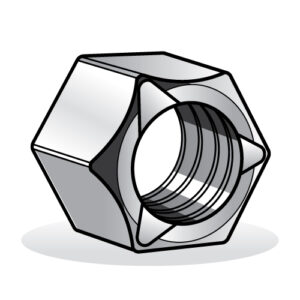
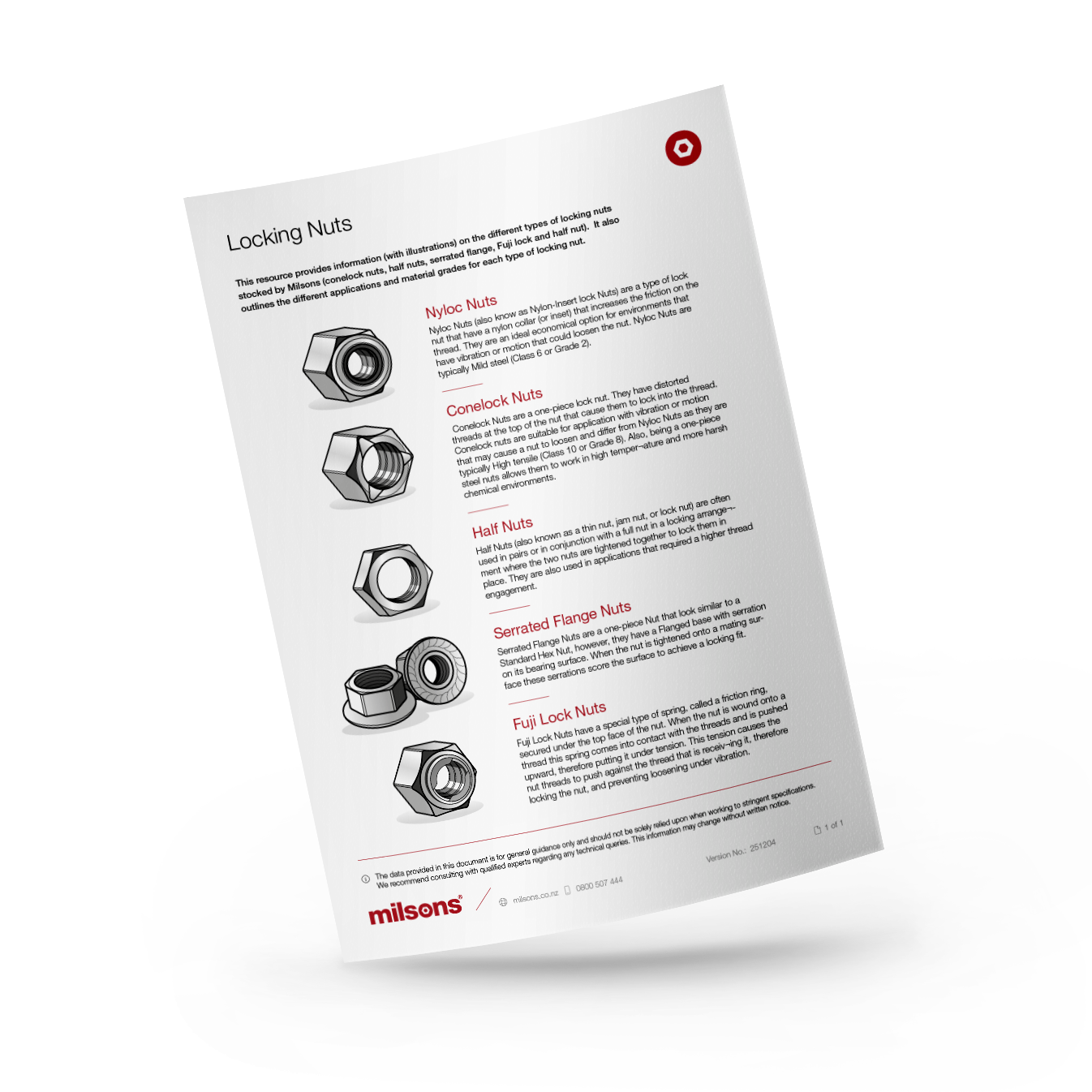
Conelock nuts are hex nuts that have a conical top and a flat bottom surface with chamfered corners. Near the top, it contains imperfect threads which distort under torque from an external thread. This helps to lock the nut in place against vibrations and sudden shocks.
Applications:
Automotive suspension, machinery, construction, and heavy equipment applications.
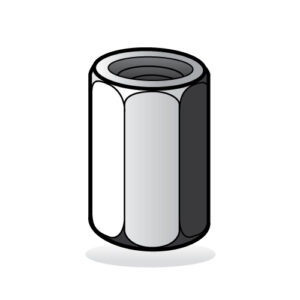
Also known as: Extension nut. Coupling nuts are cylindrical elongated nuts with internal threading. They are used to connect two male threads together and to create longer thread assemblies from shorter parts.
Applications:
To connect two externally threaded parts together in applications such as threaded rod or piping.
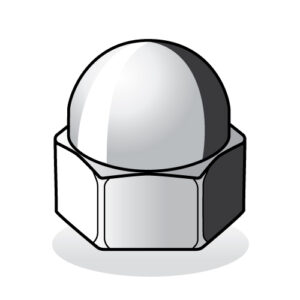
Also known as: blind nut, acorn nut, cap nut. These are nuts where one end is sealed off with a dome shape. Designed to cover and protect the ends of bolts or threaded rods, providing a smooth, finished appearance.
Applications:
Aesthetic reasons or for safety reasons (e.g. to protect from sharp threads).
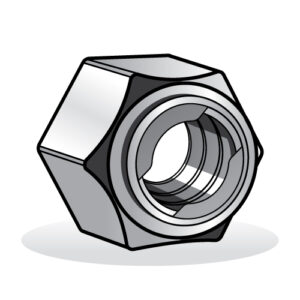
Also known as: Fuji bearing locknuts. Fuji Lock nuts feature a unique internal locking mechanism known as a friction ring, which applies upward pressure when the nut is wound onto a thread. This tension causes the nut’s threads to press against the threads it is fastened onto, securely locking it in place and preventing loosening under vibration.
Applications:
Typically used for a automotive purposes, such as mountings disc brakes, due to the locking mechanism being metal it can withstand higher temperatures unlike nylocs.
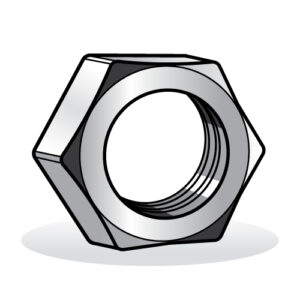
Also known as: thin nuts, jam nuts, hex lock nuts. Designed to be used in conjunction with a full nut to create a locking arrangement. The Half Nut should be threaded onto the mating thread first, followed by the Hex Nut.
Applications:
Usually used when a normal hex nut is not sufficient on its own.
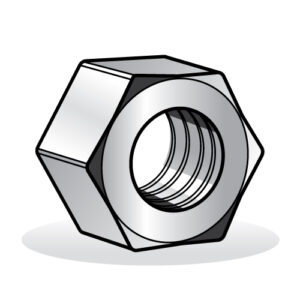
Hex Nuts are six-sided, hexagonal female fasteners with internal threads designed to fit onto a male thread. The shape of the nut is designed to provide a secure grip and create a connection between components.
Applications:
Hex nuts play a crucial role in various applications by providing a reliable method for joining and securing parts.
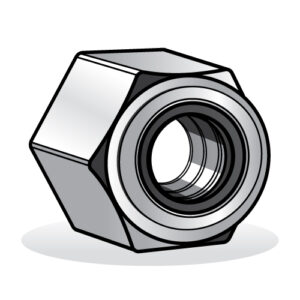
Also known as: nylon-insert lock nut, elastic stop nut, polymer-insert lock nut. hese are nuts with a small nylon or polymer insert at one end of the nut. The insert is not threaded and the diameter of the insert is slightly smaller than the nominal diameter of the threaded metal part. The insert locks the screw or bolt in place due to the smaller diameter of the insert, which presses against the screw and deforms around it.
Applications:
Alternative choice for environments subject to vibration, where a standard Hex Nut might loosen.
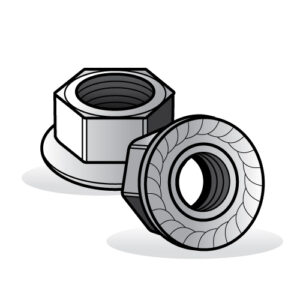
Serrated flange nuts have a flange on one end that behaves like a stationary, non-spinning washer.
The flange helps to distribute pressure from the nut more evenly in the component it is being secured to. The ‘washer’ has serrations cut at an angle to prevent rotation of the nut and stop it from loosening.
Applications:
Commonly used in the automotive and construction industries, ideal for applications requiring reliability and resistance to loosening.
Structural Nuts (High Strength Friction Grip or HSFG Nuts) are heavy-duty fasteners designed to provide high strength and stability in structural applications.
Applications:
They are primarily used alongside structural bolts or threaded rods in construction and heavy machinery industries, where structural integrity is crucial.
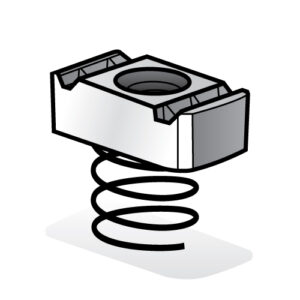
Rectangular shaped nuts with internal threading with a spring attached at the bottom. They also contain ‘grooves’ on either side that can fit and slide along the sides of a metal channel.
Applications:
Commonly used in construction, manufacturing, and HVAC to secure equipment, supports, and structural components within framing systems.
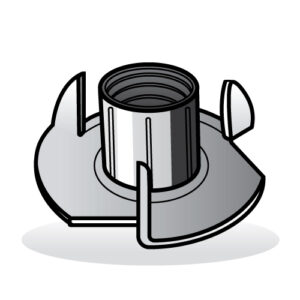
Tee nuts have a long cylindrical body with a flange at the top to create a flush surface with the workpiece. The flange has blade-like projections around it that are designed to cut into materials like wood or composite materials to make a permanent connection.
Applications:
Places that require permanent connections in wood, composite material.
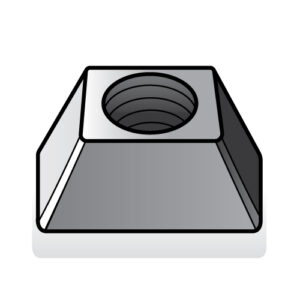
Wedge nuts (or V-nuts) are specialised, tapered fasteners designed to create secure hanging points within the V-shaped ribs of composite steel decking, typically without drilling.
Applications:
Used in construction to suspend threaded rods, pipes, cable trays, and HVAC services from composite flooring systems. Suited for applications that require precise adjustments and vibration-resistant connections. Suited for applications that require precise adjustments and vibration-resistant connections.
The data provided in this document is for general guidance only and should not be solely relied upon when working to stringent specifications. We recommend consulting with qualified experts regarding any technical queries. This may change without written notice
Version No: 260321